Translation Industry
Is Google Translate becoming a ‘gold standard’ in business?
Read time 3 m
Uttering the sentence, “Google Translate is becoming a ‘gold standard in business’”, is likely to make most linguists and translation professionals turn into slightly more articulate versions of the Looney Tunes character, Taz the Tasmanian Devil. Yet, that is exactly what it is on the verge of becoming, despite that fact that most of us know that what comes out of Google Translate doesn’t always qualify as “translation”.
Many of us have participated in the parlor game of running sentences through Google Translate, first into another language and then back again into the original, just to laugh maniacally bordering on hysteria at the absurd results (or does this happen only at parties with translators?). Yet Google Translate and other machine translation tools have slowly become a go-to instrument, and not just for those who simply want a rough guide to what something in a foreign language might mean while browsing the internet on some idle Wednesday. An increasing number of people rely on it for their professional translation needs, either as a substitute for consulting a live translator or in an often misguided attempt to save money.
Quite a number of translators have been approached by a not insignificant number of potential clients asking the translator to proofread a text that the client has fed through an online translation tool. Happily though these instances are becoming rarer. It would be nice to think that people are beginning to understand that the costs of having a professional revise a poor machine translation product are more or less equivalent to having a professional translator do the translation from start to finish. However, the likely explanation may well be that many companies have ceased to bother with professional translation altogether, opting simply to post a link that feeds their company website through Google Translate.
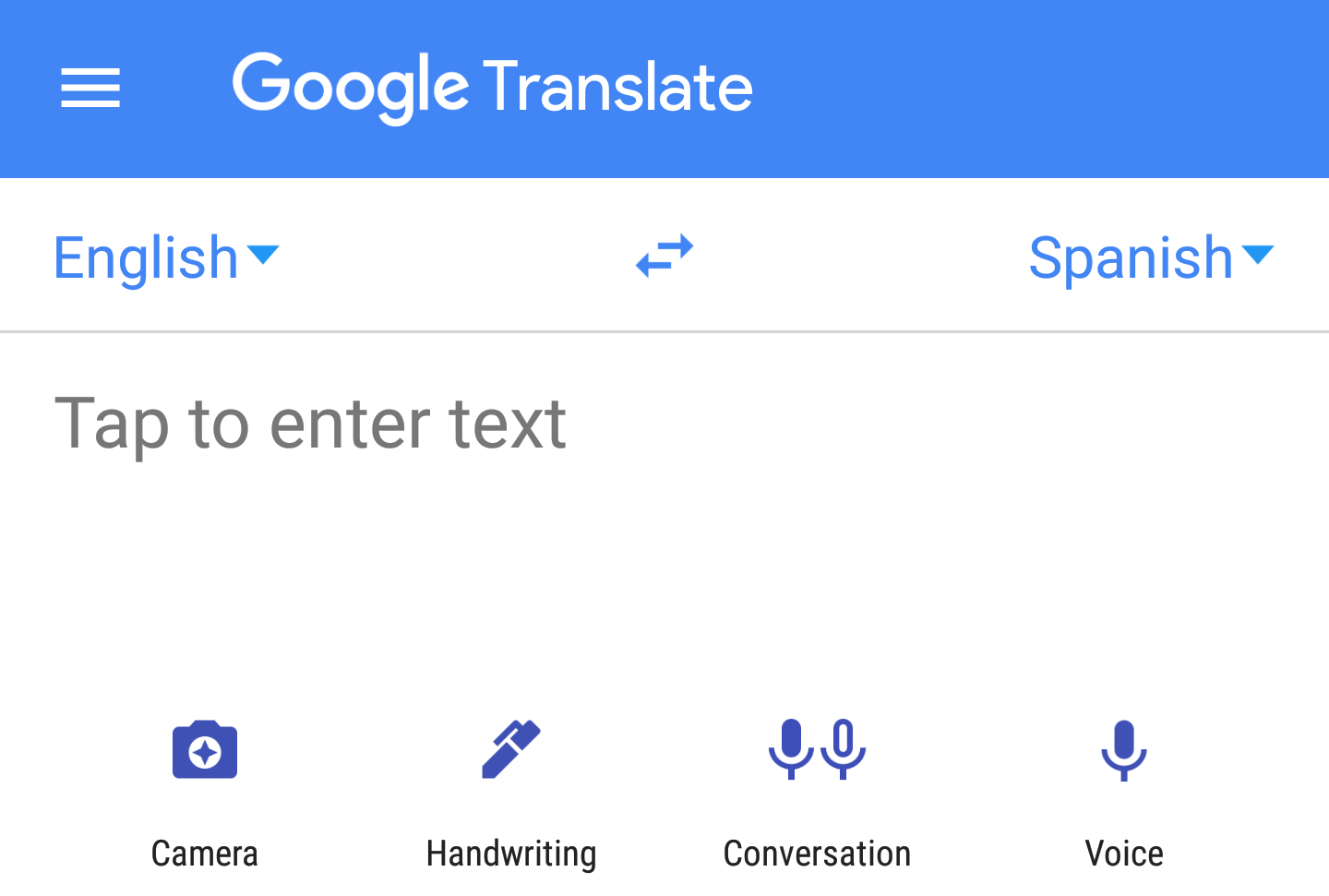
In a way, it is understandable how Google Translate has become such a ubiquitous tool of international commerce. First of all, it’s massively convenient. Everyone knows the url for Google, and the Google Translate link is just one more click away. It even has its own mobile app, for when you find yourself struggling with the dessert menu at a restaurant on holiday in Prague.
Moreover, it is fast. Just enter the word, phrase or sentence into the site or app, and it is instantly converted into words in another language. There is little to no waiting time, and Google Translate does not have to fit you into an already busy schedule. You need something translated yesterday? No problem! In less time than it would take to compose an email asking for an estimate on a translation, there is the finished translation product on your desktop.
And finally, it’s free. Translation quality of machine translations aside, Google Translate guarantees that the price is right.
It would seem that the incentives of convenience, speed and thrift have overpowered the need to communicate one’s business offerings in a clear, coherent manner. In the process, Google Translate has become something of a standard, a lowest common denominator of international business communication. The “McDonald’s” of translation, if you will. It is becoming an industry standard, not by being good, but by making it acceptable not to expect much better.
Needless to say, the growing acceptance of this lowest common denominator comes at a price. Machine translation, with its “hey, everybody’s doing it” pervasiveness, allows companies striving to expand their audiences across national borders to feel at ease with what is essentially poor and inarticulate communication.
But are there instances, where using Google Translate is a good idea, or its output is good enough? And under which circumstances? This blog is the first in a mini series that will explore the present and future of Google Translate, machine translations and computer-assisted translation tools, including insights into the professional translator’s toolbox and how to use Google Translate in the right way. Watch this space!
Author: Miriam Swietek
Get in touch
If you have a translation project you’d like to discuss with one of our project managers contact us today